The Saturday Loan: What It Takes to Get a Borrowed PA from Cupboard to Stage
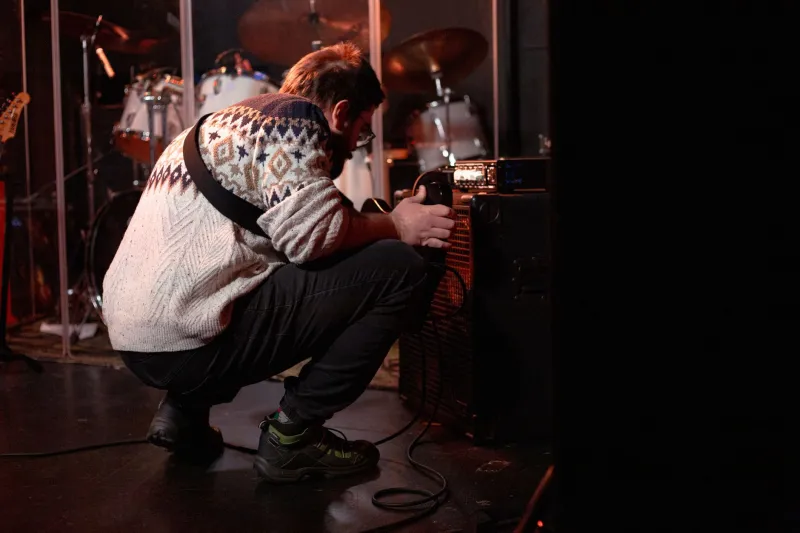
The email lands on a Tuesday evening. A youth worker in a West Yorkshire town wants to borrow a PA for a Saturday afternoon showcase: four microphones, a couple of wedges, enough cable to reach the back of a Methodist hall, and two lights that will not make the teenagers look like they are being interviewed by the police. By the standards of the volunteer-run gear library on the receiving end, it is a very ordinary request.
By Friday, that request has become a small chain of checks, signatures and carefully labelled flight cases. By Saturday, it will be a room with a soundcheck. This is the quiet logistics behind Britain's grassroots gear libraries — the volunteer-run cupboards, cages and shipping containers lending amps, desks, cables and lights to people putting on shows without a budget for a hire shop.
The enquiry is not the booking
The first thing the library asks for is not a gear list. It is context. The online form wants the event date, the venue address, the expected audience, the age range, whether the borrower has public liability insurance, and who will be responsible for the kit on the day. A volunteer coordinator reads it the way a venue manager reads a risk assessment: not to find reasons to say no, but to work out what kind of yes is possible.
This is the unglamorous truth of gear libraries. They are not Argos for amps. They are shared resources with a duty of care, and the admin is the price of keeping the kit in circulation. The coordinator checks the calendar, then the condition log, then the borrower's history. A first-time youth group might get a demonstration and a shorter loan window. A regular promoter with a track record might get the bigger desk. Neither is a judgement on talent. It is about matching risk to experience.
The kit has a paper trail
In the storage room, every amp, microphone and cable has a number. The numbers are written on gaffer tape, in a spreadsheet and, for the more fragile items, on a laminated card taped inside the flight case. The card lists what should be inside, what has been repaired, and when it was last tested. A cable that crackles is not a bargain; it is a future apology.
Maintenance is the part nobody sees. Volunteers PAT-test what they can, replace jack plugs, clean microphone grilles, check stands for missing bolts and keep a box of spare fuses that looks, frankly, like a museum exhibit. The library's rule of thumb is simple: if you cannot fix it, do not lend it. That sounds obvious until you are staring at a donated mixing desk with a dead channel and no manual.
Insurance is the unglamorous headline
Ask anyone who runs a gear library what keeps them up at night and the answer is rarely volume. It is liability. Public liability cover, equipment cover, volunteer cover and the question of what happens if a borrowed speaker falls off a stage and into the front row. Most libraries require borrowers to have their own public liability insurance for the event, and some ask for a refundable deposit or a donation towards maintenance. The paperwork is not red tape for its own sake. It is what lets a volunteer hand over a thousand pounds' worth of kit to someone they met three weeks ago.
The good libraries are clear about the boundary. They are not a hire company, and they are not a magic money tree. They are a shared cupboard with a risk assessment. The better ones also build relationships with local venues, councils and youth services so that a borrower who cannot tick every box has somewhere to turn for advice rather than a flat no.
Storage is a venue in its own right
A gear library needs a home before it needs a following. Dry, secure, accessible and — crucially — with a door wide enough for a flight case. A garage is fine until it floods. A cupboard is fine until nobody can reach the spare desk. The libraries that last tend to have shelving, labels, a loading bay, and an agreement with a landlord that does not change every six months.
Storage is also where the social side of the library lives. Volunteers drift in to fix a lead or drop off a donation, and end up talking about who is putting on what. That informal network is part of the value. The kit is the excuse.
Load-in is the handover
Saturday, 1.30pm. The borrower arrives with a van borrowed from a parent and a printed copy of the checklist. A volunteer walks them through the cases, counts the microphones, demonstrates the desk's basic settings and explains the one channel that needs a gentle touch. It is not a full sound engineering lesson, but it is enough to stop the afternoon ending in feedback.
The borrower signs. The volunteer takes a photo of the loaded van. The library's number is on the checklist in case something fails. By 2.15pm the kit is in the hall and the first band is arguing about where to put the drum kit. By 6pm it is over, and the return is arranged for Sunday morning. One microphone clip is missing. It happens. The library notes it, shrugs and adds it to the shopping list.
The maths of a borrowed PA
Hiring comparable kit might cost £250 to £400 for a weekend, depending on where you are and what you need. The library might ask for a £20 donation and a promise to return everything clean. That is a huge difference for a youth group or a first-time promoter, and it is why gear libraries keep appearing in towns where the local hire shop has closed.
But the saving is not free. It is subsidised by volunteer hours, donated kit, cheap storage and a lot of quiet maintenance. The real question for anyone thinking of starting one is not whether people need it. They do. It is whether you can build the boring systems that make lending safe enough to last.
Starting one in 2026
If you are thinking about setting up a gear library in your own town, start small and start boring. Begin with the kit you already have and can maintain, not the wish list. Get insurance advice before you advertise. Find storage with level access and a lock that works. Keep the booking process simple enough that a volunteer can run it from a phone, but detailed enough that you know who has the desk. Budget for consumables — cables, batteries, gaffer tape, plugs — because they disappear. And do not lend what you cannot repair.
The libraries that work best are not the ones with the biggest inventory. They are the ones that know their limits, answer their emails, and understand that a borrowed PA is never just equipment. It is permission to put a show on. That is worth the paperwork.