Tape, Toast and Twenty Quiet Minutes: The Volunteer Hour Before Doors

Photo: volunteers setting up small music venue gaffer tape cables UK community hall, via givefinity.com
At 6.42pm on a wet Tuesday in Leeds, the queue outside is still a rumour. Inside, the room smells faintly of radiator dust and lemon cleaning spray. A volunteer called Nadia is on her knees by the stage lip, taping down a cable that has already tried to trip two people. The doors say 7.30pm. The room, for now, belongs to the people who got here first.
This is the hour that rarely makes the poster. It is not the support slot, not the headline set, not the moment the crowd finally loosens up. It is the unglamorous prelude: the sound engineer coaxing a borrowed PA back to life, the person checking whether the toilet roll situation is actually a crisis, the band member quietly asking if there is anywhere to fill a water bottle. Grassroots gigs are full of these small acts of readiness. They just tend to happen before anyone is watching.
The room isn't ready until someone checks the kettle
In a converted chapel in Sheffield, the first job is always the kettle. Not because the riders are lavish — they are usually a tray of biscuits and a request for oat milk — but because a hot drink is the quickest way to make a cold room feel inhabited. The volunteer on tea duty is often the same person who printed the tickets, answered the venue email and remembered to bring the blue roll. Their name rarely appears on the line-up. Their work is everywhere.
There is a particular choreography to this hour. Someone sweeps the floor while someone else tests the mic. A stack of chairs gets moved, then moved back. The merch table is laid out with the optimism of a school fete, and then rearranged because the door is going to bang against it. In one Bristol venue, the pre-doors ritual includes propping open a fire door with a milk crate so the room can air out before the audience arrives. It is not glamorous. It is also the difference between a night that feels cared for and one that feels like a shrug.
A borrowed PA and the art of the gentle ask
Sound engineers at this level are part fixer, part diplomat. The PA might be borrowed from a friend of a friend, or inherited from a pub that closed, or held together by one working monitor and a lot of hope. The engineer arrives early not just to line-check but to negotiate. Can the headline band use the house drum kit? Will the support act accept a shorter changeover? Is there a spare DI box anywhere in the building, and if not, who can ring someone who might have one?
Martha, who runs sound at a community arts space in Manchester, describes the hour as “a series of small problems solved before they become audience problems.” She is usually in the room before the band has loaded in, walking the space with a torch, checking where the feedback lives. “You are listening for what the room wants to do,” she says. “Some rooms want to boom. Some want to swallow everything. You have to meet them where they are.”
The work is technical, but it is also social. A good sound check before the sound check involves making a nervous first-timer feel less like an impostor. It means showing someone where to plug in, explaining that the buzz is probably the laptop charger, and not sighing when the answer is a loose jack. The invisible labour here is as much emotional as it is electrical.
The toast test
Then there is the toast. At a village hall gig in Norfolk, the volunteer on food duty is buttering slices for the band because the pub kitchen has closed and the nearest chip shop is a twenty-minute drive. The toast is not on the rider. It is not part of the ticket price. It is a small, practical kindness: something warm before a set, something to settle the stomach before the drive home.
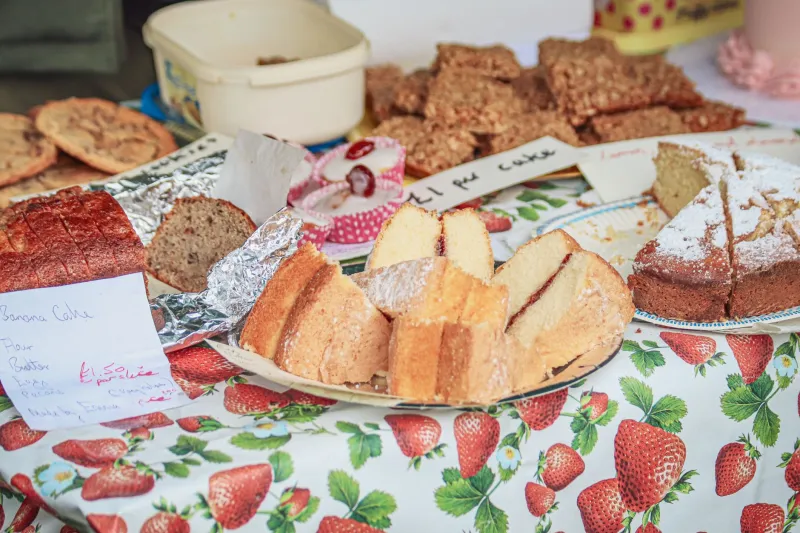
Food at grassroots venues is often like this — improvised, unfussy, slightly chaotic. A slow cooker of chilli. A tray of flapjack cut into squares. A plate of sandwiches with the crusts left on because nobody has time for that level of presentation. The person buttering toast is not thinking about hospitality as a brand value. They are thinking that the band looks tired, and that the green room is really just a side room with a coat rack.
This is the part of the hour that stays with people. Not the cable-taping, necessarily, but the feeling that someone has thought about the human beings behind the instruments. The room feels ready because someone has remembered the small stuff: water, loo roll, a bin bag, a chair that doesn't wobble.
What the empty hour actually buys
By 7.25pm, the room has changed. The lights are lower. The merch table has a float. The PA is making a low, steady hum that sounds almost like breathing. The first audience members are hovering by the door, shaking umbrellas and peering in. The volunteers have disappeared into the margins again, which is exactly where they are most useful.
What the empty hour buys is not perfection. The monitor will still squeal during the first song. Someone will always forget a power supply. The toast will go cold. But the hour buys a kind of confidence: the sense that the room has been looked after, that the night has a floor beneath it. It is the difference between walking into a space that feels assembled and one that feels alive.
So next time you arrive early and see someone winding a cable around their elbow, or a sound engineer muttering at a borrowed speaker, or a volunteer carrying a plate of buttered toast through a corridor, know that you are watching the real sound check. It happened before you got there. It is happening still.