Measure Twice, Welcome Once: Access as Routine in Britain’s Small Rooms

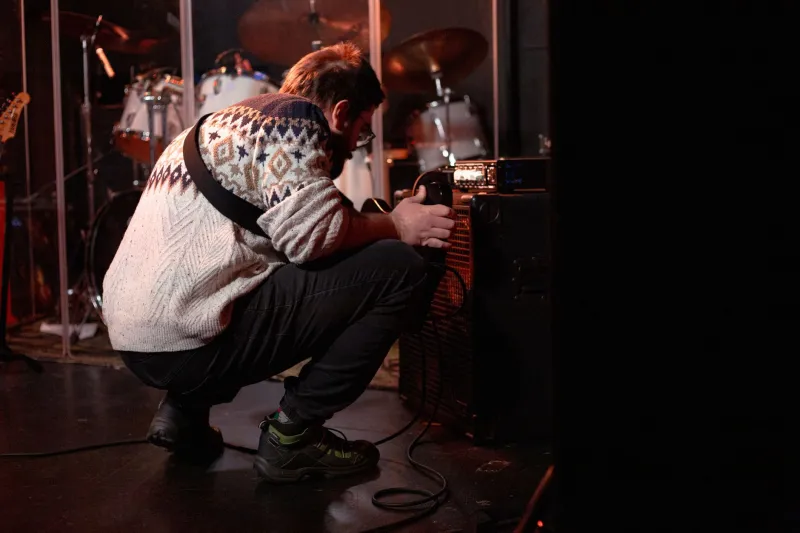
Photo: John Robert McPherson, CC0, via Wikimedia Commons
On a wet Friday in Leeds, the doors are still an hour from opening and someone is already outside with a tape measure. They are not measuring for a poster or a merch table. They are checking the route from the pavement to the stage: the kerb, the threshold, the narrow bit by the fire door, the place where a cable run could become a trip hazard before it becomes a barrier. In a room like this, access is not a separate project with its own funding bid. It is part of the get-in.
The bit before the band
Grassroots venues rarely have a dedicated access officer. They have a volunteer with a clipboard, a promoter with a WhatsApp group and a caretaker who knows which door sticks. That is why the most useful access work often starts as production work. Someone walks the route. Someone asks whether the accessible loo is unlocked, clean and not currently holding six folding chairs and a mop bucket. Someone checks that the temporary ramp is rated for the job and that it does not end in a puddle.
The ramp is a good example because it sits between worlds. To a production manager, a ramp is kit: it has a weight limit, a surface, a safe angle and a place in the van. To a wheelchair user, it is the difference between a night out and a night in. Small venues are getting better at treating it like the PA or the lighting desk — something you plan for, store properly and test before doors, rather than something you improvise when someone arrives.
That does not mean every room needs a permanent concrete slope. It means the conversation happens early. A village hall might borrow a portable ramp from the local builder’s merchant or the men’s shed. A working men’s club might buy a threshold strip so a powered chair can clear a lip between rooms. A cinema or gig space might mark a level route with tape and check it after the chairs are laid out. None of this is glamorous. All of it is the rig.
What a small budget can actually fix
The encouraging thing about access in grassroots rooms is how much of it is about attention rather than cash. A clearer website listing that says step-free access, accessible loo, no quiet space, loud room costs nothing but honesty. A reserved sightline near the sound desk costs a little planning. A box of ear defenders behind the bar costs less than a round. A sign that says the accessible loo is on the left, not through the storeroom, costs a laminator pouch.
Then there are the fixes that need a small budget line: a decent portable ramp, a RADAR key on a hook, a handrail for a step that everyone else has learned to ignore, a couple of battery-powered lights for a dark route to the loos. Promoters who put on ticketed events can add an access contact to the ticket page and offer a free companion ticket without making it feel like a favour. Volunteers can be briefed in five minutes: know where the ramp is, know who has the key, know which corner is quiet, know who to ask if something is not working.
It is also worth saying that access is not only about wheelchairs. It is about people with sticks, people who cannot stand for long, people with Crohn’s who need the loo to be open and signposted, people who are hard of hearing and need to see a face when someone is speaking, people who find a packed room overwhelming and need somewhere to sit down for ten minutes. A quiet corner with two chairs and a bit of distance from the speakers is not a luxury. It is part of the welcome.
The loo, the level and the honest listing
Ask anyone who runs a small venue about access and the conversation often lands on the accessible loo. It exists, usually. It is also frequently used as storage. The fix is not always a refurbishment. Sometimes it is a rule: nothing gets stored in there, the key lives on the hook, the grab rails are checked monthly, and the light works. If the room has a Changing Places facility nearby, say so. If it does not, say that too. Overpromising on a listing is worse than admitting a limitation, because people plan journeys around what you publish.
The same goes for the word level. A step-free route is not the same as a level route. A temporary ramp is not the same as a permanent one. A venue with a steep approach, gravel outside and a heavy door is not automatically unusable, but it needs describing properly. The best listings read like a friend giving directions: here is the door, here is the bell, here is who to ask for, here is the quiet bit, here is the loo, here is what we are still working on.
Borrow this rig
For other rooms thinking about where to start, the borrowable approach is simple. Walk the route as if you have never been to the building. Measure the narrowest point. Check the loo. Check the lighting. Check the signage. Ask a local access group or a disabled gig-goer to look with you, and pay them for their time if you can. Put access on the production schedule next to load-in and soundcheck. Give someone the job of checking it before doors, even if that job is just five minutes with a torch and a roll of tape.
Then review it after the show. Did the ramp work? Did people find the quiet space? Was the accessible loo open at the end of the night, or had it become a cloakroom again? Small rooms are good at learning by doing. Access is no different. It is not a certificate on the wall. It is a routine that gets better each time you run it.
The best version of this work is invisible in the right way. Nobody remembers the ramp if it works. They remember the band, the cheap bar, the friend they bumped into by the merch table. That is the point. Access is not the opposite of a good night out. It is one of the things that makes a good night out possible for more people — and in Britain’s small rooms, it starts with someone measuring the route before the first chord.