What Survives the Marquee: A Festival Legacy Audit for the Quiet Week After
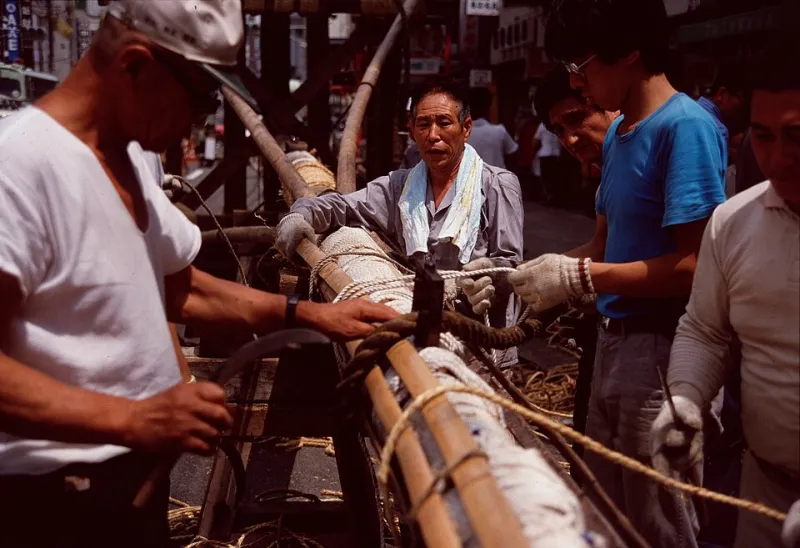
Photo: Marie-Sophie Mejan, CC BY 4.0, via Wikimedia Commons
The Tuesday after a community festival is one of the most honest mornings in the local calendar. The bunting is in a hedge. Someone's gazebo is bent at the corner. A laminated sign saying STRICTLY NO PARKING is now just litter with a laminating bill attached.
And in a village hall kitchen, four people are deciding, without quite saying it, whether they will ever do this again.
That conversation is the one that matters, and it almost never gets minuted.
Footfall is the easiest number and the least useful
Every festival has a headline figure. Two thousand through the gate. Three hundred and forty cups of tea. A local paper photo of a councillor holding a cheque. The number goes in the funder's report, the report goes in a folder, and by March nobody could tell you what it proved.
Footfall measures attendance, not effect. It cannot tell you whether a fourteen-year-old who spent Saturday on the sound desk has since been offered work experience, or whether the venue's licence now permits amplified music after six, or whether the woman who ran the raffle has finally learned to do a receipts book.
None of that will show up in the report. All of it is what makes next year possible.
The things that don't go home
Spend an hour with organisers who have run an event for a decade or more and the inventory of what persists is surprisingly consistent.
Skills. Treasurers who understand restricted funds. People who can write a risk assessment without treating it as an insult. Someone who knows how to ring the council's licensing team and get an answer the same week.
Kit. Marquees, a small PA, trestle tables, a generator, fifty metres of festoon lighting, a defibrillator that everybody hopes will stay in its box. The kit is usually the most valuable asset a community festival owns and the least formally accounted for.
Relationships. With the parish council, the church, the rugby club, the two farmers who lend a field and the shop that stays open late. A festival that has those relationships can be revived after a fallow year. One that doesn't, usually can't.
Precedent. A licence granted once is easier to grant again. A traffic plan that worked is a template. Goodwill in a village is a finite but renewable resource, and it is spent by noise, mud and the state of the toilets.
How a festival quietly folds
The failure mode is rarely dramatic. More often it goes like this: one person has carried the committee for years, nobody has been shown the spreadsheet, and then a house move or a hip operation ends the enterprise overnight. The kit is in a garage three villages away. The bank account has two signatories and one of them has died. The accounts were filed late and nobody quite wants to be chair.
There's a version of this that plays out even when the festival is successful. The event is so reliant on two or three people that its own competence becomes its fragility. Success buys footfall; it doesn't automatically buy succession.
Several organisers I've spoken to over the past year describe the same remedy in almost the same words: write it down, and name a second person for every job — not as a deputy, but as someone who has actually done the thing once while the first person watched.
The legacy checklist
Practical and unglamorous, in roughly the order it's worth doing.
- Do the audit while the bins are still out. Within ten days, list every asset the festival owns or borrows: kit, cash, licences, contracts, accounts and passwords.
- Count your people, not just your public. Volunteers, their roles, who says yes to what, and which roles have nobody behind them. That gap list is your recruitment plan for the next event.
- Name a custodian for the kit. Where it lives, who holds the keys, what it's insured for, when it was last PAT tested.
- Write the handover file. Everything that would stop a new organiser in their tracks: the licence contact, the safe access plan, the email list, the template letters, the number for the marquee firm.
- Decide what you'd keep if you never did it again. The volunteer network? The winter social? The equipment loan scheme? Some festivals matter most for what they leave running in the other eleven months.
- Ring-fence a small reserve. A float the next committee can use without panic is worth more than a bigger, riskier event.
- Thank everyone specifically. Generic thanks produce generic loyalty. 'You did the parking for four hours in the rain' produces next year's parking.
- Say out loud what the festival is for. If nobody can finish that sentence without referencing footfall, that's the thing worth fixing before the next one.
Legacy is a decision, not an afterthought
There is an argument that community festivals should stop apologising for being small and stop borrowing the success metrics of commercial events. A gathering of six hundred people on a recreation ground has almost nothing in common with a ticketed festival in a field with a camping licence and a sponsor's logo on the wristband.
What it has instead is something more durable: a room full of people who have now done something difficult together and know each other's phone numbers. That network is the actual product. The stage and the sound system are just how it gets assembled.
Which is why the most useful question isn't how many came, but who stayed, what's still in the shed, and whether anyone else knows where the key is kept.
If the answer to the last one is no, that's your job for the week after next.