Fold the Chairs, Save the Culture: In Praise of the Community Committee

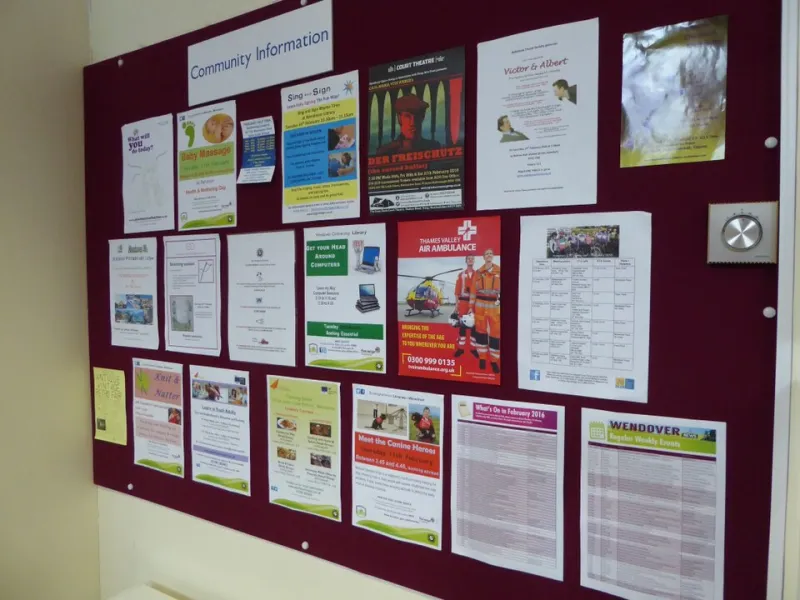
Photo: သူထွန်း, CC BY-SA 4.0, via Wikimedia Commons
I have a confession: I love a committee meeting. Not in a ironic, pin-badge way. I mean the real thing — a Tuesday night in a church annexe, a radiator that clanks, a plate of custard creams and a treasurer saying, ‘Item four, village hall hire, and I’m afraid it’s gone up again.’
It is not glamorous. It is not content. But it is the engine room of British grassroots culture. The festival, the film club, the community radio station, the allotment society, the youth theatre: all of them run on the unglamorous, repetitive, deeply human work of a committee.
The glamour is in the follow-up email
We celebrate the headline: the band, the screening, the harvest supper. We rarely celebrate the thing that made it possible: someone chasing a public liability certificate at 9.40pm on a Thursday.
Committees do the boring, essential work. They open bank accounts. They apply for grants. They write risk assessments. They book the hall, chase the deposit, organise the rota, remember the key code and decide whether the PA is worth repairing or whether it is time to admit that the crackle is permanent.
In community media, this is especially true. A radio station is not just a microphone and a playlist. It is a licence, a bank account, a safeguarding policy, a schedule, a set of volunteers who all need to be trained. A film club is not just a projector. It is a screening licence, a venue, a committee that knows how to say ‘no, we can’t show that until the rights come through’.
The committee is where the culture gets its paperwork in order. It is also where the culture gets its arguments out in the open, which is usually healthier than letting them fester in a group chat.
Three volunteers on why they stayed — and why they nearly left
Maureen, 68, has been on the committee of a village film club for 19 years. She has done pretty much every job: chair, secretary, treasurer, person who brings the milk. ‘I stayed because nobody else would do it,’ she says, laughing. ‘And then because I actually liked it. You get to know people. You get to see the same faces every month. It’s a social life with minutes attached.’
But she nearly left in 2023, when the hall hire doubled and the committee shrank to three people. ‘We had a meeting where we realised we were all over 60 and none of us had a successor. That was a wake-up call. We put a notice in the newsletter and got two new people. One of them is 34. She’s now the treasurer. I’m teaching her the spreadsheet.’
Dev, 34, helps run a community radio show and sits on the station’s management committee. He joined because he wanted to make sure the station stayed open to new voices. He nearly quit after a year of what he calls ‘meeting creep’: agendas that ballooned, decisions that got relitigated, the same two people talking for 45 minutes about a filing cabinet.
‘We fixed it by having a chair who actually chairs,’ he says. ‘Start on time, finish on time, send the actions out the next day. It sounds boring. It is boring. But boring meetings are how you protect the fun stuff.’
Aisha, 45, is part of a festival committee in a small town. She has been the person who holds the bank card, the login and the phone number for the portable loo hire. ‘The burnout is real,’ she says. ‘You become the default. Everyone knows you’ll sort it. The way out is not to be a hero. The way out is to write things down and share the load.’
The succession problem is a culture problem
Most committees do not fail because people stop caring. They fail because the knowledge lives in one person’s head, or one person’s inbox, and nobody planned for them to move house, get ill or simply need a break.
Succession is not a HR word. It is a practical kindness. It means having a handover folder. It means co-chairing for a year before someone steps up. It means term limits, so that leaving is normal rather than a crisis. It means asking new people what they want to do, not just what needs doing.
It also means accepting that the committee might look different in 2026: hybrid meetings, shared spreadsheets, WhatsApp for the quick stuff and actual minutes for the decisions that matter. The format can change. The point is that someone is still folding the chairs.
A beginner's guide to joining — or reviving — a committee
Start with one small job. Not chair. Not treasurer. Maybe ‘person who replies to the venue email’ or ‘person who makes the tea’. Small jobs are how you learn the rhythm.
Ask for the handover. If there isn’t one, offer to write it. A one-page document listing the key dates, the logins, the contacts and the recurring problems is worth more than a hundred ideas.
Protect the meeting. Have an agenda. Start on time. End on time. Send actions afterwards. If a decision needs more than 20 minutes, park it and come back with facts.
Share the bank card. Not literally, but practically: two signatories, a shared folder, a treasurer who explains the budget in plain English. If one person holds everything, the committee is one holiday away from a crisis.
Recruit for skills, not just warm bodies. Someone who likes spreadsheets. Someone who knows about safeguarding. Someone who can write a grant application. Someone who will say ‘I don’t know, let’s find out’.
Say thank you. Often. Publicly. The committee is not a tax on culture. It is culture’s backstage crew. And in 2026, with venues under pressure and volunteers stretched, the least we can do is save them a biscuit.