Clipboard Country: The Unpaid Work That Makes an Open Mic Feel Effortless
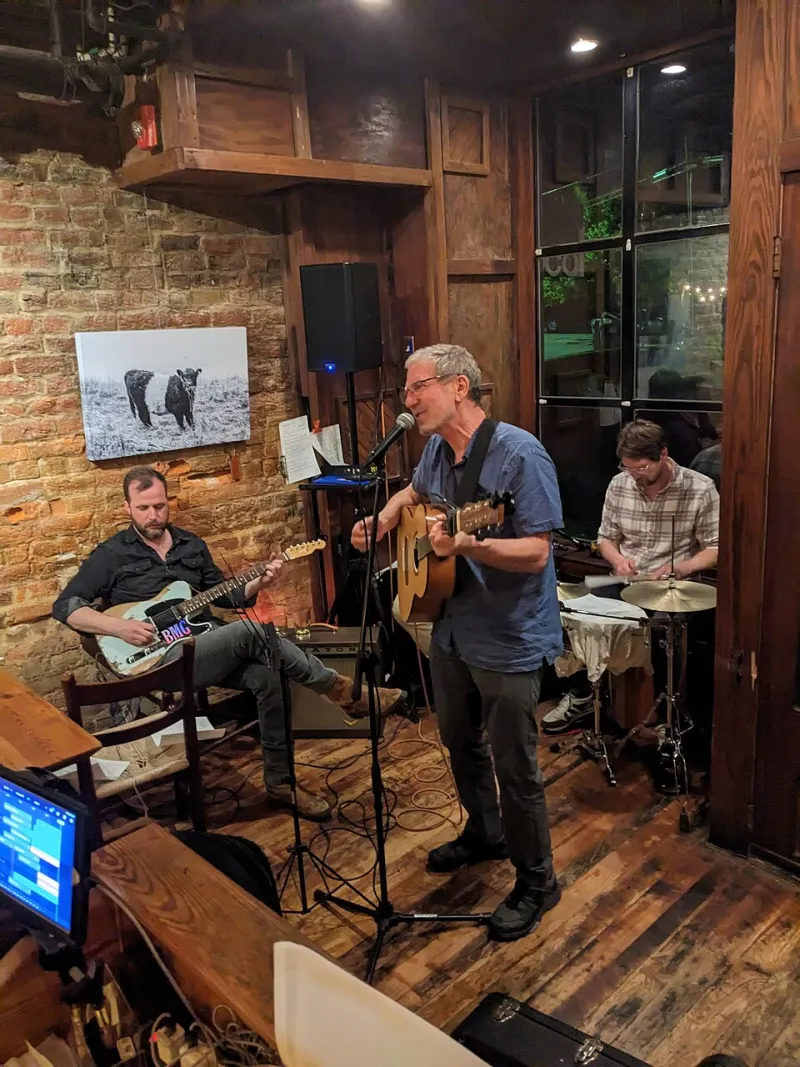
Photo: Artaxerxes, CC BY-SA 4.0, via Wikimedia Commons
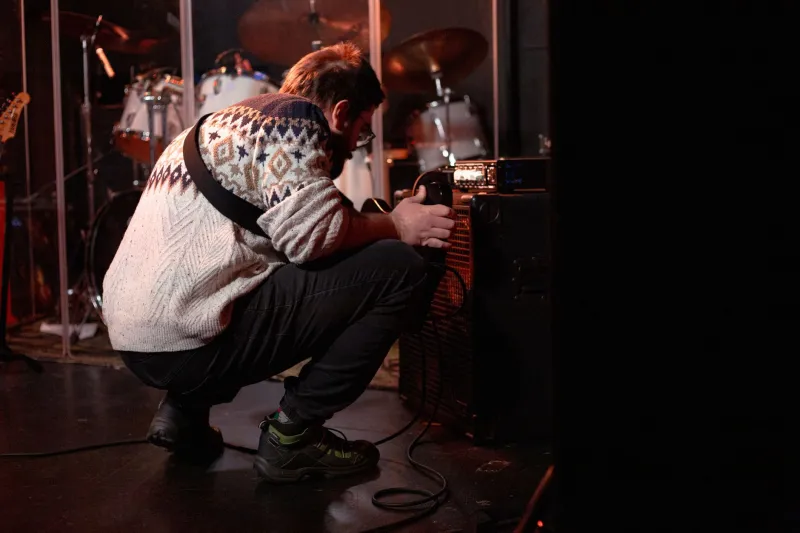
It is 7.12pm on a wet Tuesday in Sheffield, and the back room of a pub is doing that thing where it looks empty until you notice the cables. A woman called Marta is kneeling by a radiator, untangling a jack lead from a bag of crisps. On a table near the door is a clipboard, a biro on a string, and a sheet of A4 with ‘OPEN MIC — 5 MINS / 2 SONGS’ written in marker. By 7.30 there will be eleven names on it. By eight, there will be a queue for the toilet and a man in a fleece asking whether he can do a poem instead.
The clipboard is the first clue that this is not quite the casual evening it pretends to be. Open mics are often talked about as the softest rung of the music ladder: a pub, a PA, a handful of regulars, a chance to try a new song. But spend time with the people who host them and a different picture emerges. The sign-up sheet is a small piece of social engineering. The five-minute warning is a pastoral act. The sound check is a negotiation. And the host — usually unpaid, often exhausted, occasionally armed with a whistle — is the reason the room feels like it is holding together at all.
The first job is not the music
Marta has run this night for four years. She took it over from a friend who moved away, and she has learned that the order of the list matters more than most people realise. ‘If you put four very new acts in a row, the room gets restless and they feel it,’ she says. ‘You learn to scatter. Put a confident act in between. Put the first-timer after the interval, when the room is warm but not too drunk.’
In Bristol, Danny runs a night in the back of a former betting shop. His sign-up sheet is also a risk assessment. ‘We have a house guitar, a piano and one mic,’ he says. ‘If someone turns up with a five-piece band and a drum kit, I need to know before they start setting up. It is not about being precious. It is about the next act getting their turn.’
Hosts describe a familiar cast: the regular who has been coming for years, the teenager with a phone full of backing tracks, the poet who needs a chair, the duo who have driven forty minutes and will not get a sound check. The job is to make all of them feel like they are part of the same night, even when they are not.
The five-minute warning is a craft
At a community centre in Glasgow’s East End, Aisha hosts a monthly night that starts at seven and finishes before the last bus. She says the five-minute warning is never just timekeeping. ‘You can see someone’s hands shaking from the back of the room,’ she says. ‘You go up and say, “You’ve got five minutes. Do you want to do the shorter one first?” They often do. It is not about lowering the bar. It is about giving them a way through the door.’
That kind of quiet intervention is hard to teach. Hosts learn to read the room: when to fill a gap with a joke, when to ask the bar to turn the music down, when to stand at the side of the stage so the performer has something to look at other than a sea of faces. They also learn to manage the crowd. ‘We ask people to listen,’ Aisha says. ‘Not in a schoolteacher way. Just: can we give the next act the same courtesy we would want?’
Sound check is a conversation with a room
In Norwich, Tom runs an open mic in a church hall with acoustics that punish anyone who arrives late. He keeps a rug in the cupboard to soften the bounce, and he has a routine for the sound check that takes less than two minutes. ‘Can you hear yourself? Sing a line. Now speak at the volume you would speak to a friend. That’s it.’
The point is not to make a pub back room sound like a concert hall. It is to make the performer feel held. ‘You are not fixing a PA,’ Tom says. ‘You are telling someone they are allowed to be here.’ That can mean moving a monitor, lending a capo, or gently explaining that the mic is not a magic wand. It can also mean saying no. ‘I had a lad last month who wanted to play a backing track off his phone through the house system. The cable was broken. We did it acoustic. He was fine. But I had to make the call.’
The room has to be taught to be kind
Every host has a story about the one person who will not stop talking at the bar. The interventions are rarely dramatic. A hand on the shoulder. A request over the mic: ‘We’re a listening room until ten, then it’s a pub again.’ A quiet word about phones. ‘You are not a bouncer,’ Danny says. ‘You are a host. But sometimes hosting means reminding people what kind of night this is.’
That work is especially delicate when the act on stage is young or new. Hosts talk about pairing nervous first-timers with forgiving slots — not last, when the room is emptying, and not first, when the PA is still crackling. They talk about the difference between a crowd that is quiet because it is listening and a crowd that is quiet because it is waiting for the football. They talk about the regular who always claps a little too loudly, and the fact that this is not a problem.
It looks casual because someone is holding the edges
Open mics are often described as the grassroots of the grassroots: the place where people try a song, a poem, a comedy set, a first gig. But they are also infrastructure. They are the low-cost entry point for local musicians, the noticeboard for a scene, the reason a room is warm on a Tuesday in November. In towns without a dedicated music venue, they are the venue.
And the people who run them are doing skilled work for very little money. Some get a small fee. Many get a drink and a thank you. A few have been doing it so long that the night has become part of the civic furniture. When they stop — because they move, or burn out, or the pub changes hands — the gap is not just a missing night out. It is a missing route in.
At 10.40pm, Marta is stacking chairs and winding the biro back onto its string. The clipboard goes in a drawer behind the bar. Eleven names, two no-shows, one encore, one poem about a bus. It looked effortless. It always does.